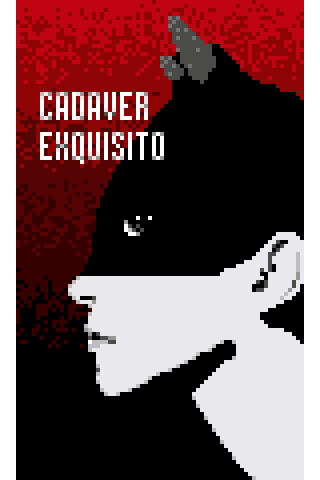
Cadáver Exquisito
Also spoilers.
This was my first time reading a book in Spanish. Well suited for an apprentice, it is written in present, using simple words, practical vocabulary, and short sentences.
We are thrown into a world where a virus infected all animals with the exception of birds. This virus is lethal to humans, so a choice is made to destroy all animals including livestock, pets and wildlife1. People are afraid of surviving birds, and carry umbrellas so they don’t get shat on.
Inevitably2, people start craving meat. And so a lobby pushes the governments worldwide to legalize and institutionalize cannibalism. Crucially eating people remains illegal, so a selected population is turned into cattle.
Our protagonist is Marcos Tejo, a high level executive of a slaughterhouse/refrigeration company. The state of the world is making him miserable. He finds his job and all people associated with the meat industry despicable, but as he cares for his very ill father and needs money. The death of their son destroys his couple. His wife leaves to live with her mother and he is pushed further into depression. Life is devoid of purpose, words have lost their meaning; things just happen.
We discover the details of the special meat industry by following Marcos through his weekly routine. He inspects various parts of the supply chain. Breeding farm, slaughterhouse, meat shop… The story is an increasingly disturbing horror show; the second chapter already includes eating people alive and grilling infants! It only gets worse from there on.
Everybody but Marcos is complacent with the new world order. Hunting humans for sport is normalized. Marcos’ sister installs a walk-in fridge and special room to keep live cattle in her apartment. His butcher friend talks about how they needed to adapt the cuts.
First few chapters seem an obvious criticism of the meat processing industry. Replace humans by animals, and you get modern day industrial farming. The next line of thought is criticism of individuals who work in unethical fields, despite knowing that it is morally wrong. Post-modernist would blame the society for forcing this reality upon us3.
❦
The story takes a different turn when Marcos is gifted a woman from one of his clients. Having stopped eating meat (a fact he hides) he does not know what to do with her. Normally his options would be to slaughter her, or sell her. He doesn’t want to do either so he just leaves her in a shed, tied and feeds her. After a particularly disturbing day he sleeps with her4, impregnates her, and moves her to his house. Where he keeps her under constant surveillance. From now on he needs to avoid authorities because what he did is a capital crime, for which the punishment is being sacrificed and eaten.
When the baby is due, Marcos calls his estranged wife5, pleading her to deliver the baby. She is horrified and scared, but complies. Marcos explains that he infant is their second chance to live as a happy couple. He promptly sacrifices the mother, and the book ends with him saying: “She looked kinda human.”
What a plot twist!
Our hero is not the only sane person left on the planet! He is like everybody else. Marcos’ depression had everything to do with the loss of his child, but since
-
According to some characters the virus was a hoax, a rumor spread by government to control population. This theory is neither proven nor debunked. ↩︎
-
The story takes place in Argentina. ↩︎
-
Personally I find that individuals are at fault more often than society. After all, society is composed of individuals. ↩︎
-
She didn’t and couldn’t give context, so of course this is rape. ↩︎
-
Who, we learn, is a nurse. ↩︎